
Republic Day Parade: Behind the Scenes of India’s Biggest National Event
- September 2, 2025
- Event
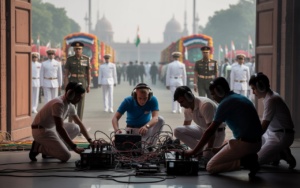
Republic Day Parade: Behind the Scenes of India’s Biggest National Event
Every year on 26th January, India comes together to celebrate Republic Day, a day that reminds us of the adoption of the Constitution in 1950. While people across the country celebrate this day in schools, colleges, and housing societies, the biggest and most iconic celebration happens in New Delhi – the Republic Day Parade.
When you watch the parade on TV or witness it live at Kartavya Path (earlier Rajpath), it looks like a grand, smooth, and colorful event. The marching contingents walk in perfect rhythm, tanks roll majestically, cultural tableaux (jhankis) pass one by one, school children perform dances, and the Indian Air Force ends the show with breathtaking fly-pasts.
But have you ever wondered – how does this massive event get planned and managed? Who organizes it? How do lakhs of spectators, VIPs, and global guests sit comfortably and safely? That’s where event management comes in. Behind the glamour of the parade lies months of planning, teamwork, rehearsals, and dedication.
In this blog, we’ll explore not only the Republic Day Parade itself, but also the behind-the-scenes efforts that make it India’s biggest national event.
The Significance of Republic Day Parade
Before diving into the management side, let’s understand why this event is so important:
National Pride – The parade showcases India’s strength, unity, and culture to the entire world.
Military Power – The Army, Navy, and Air Force display their might through tanks, missiles, helicopters, and aircraft.
Cultural Diversity – Tableaux from different states and ministries show India’s art, festivals, dance, and history.
Unity in Diversity – From Ladakh to Tamil Nadu, Punjab to Nagaland, every part of India gets represented.
Global Attention – A foreign Head of State is invited as Chief Guest every year, making it an event of international diplomacy too.
The parade is not just entertainment – it is India’s identity on display.
Planning the Republic Day Parade: Who Does What?
Organizing the Republic Day Parade is not a one-day job. It requires months of advance planning. Let’s break it down:
Government of India – The Ministry of Defence is the main organizer. They coordinate with different ministries, armed forces, and cultural departments.
Armed Forces – The Indian Army, Navy, and Air Force prepare their marching contingents, weapons display, and aerial fly-pasts.
State Governments – Each state sends proposals for their tableaux. A special committee selects the best ones for the parade.
Schools and Cultural Teams – Hundreds of children are trained for folk dances, patriotic performances, and cultural programs.
Delhi Police & Security Agencies – With lakhs of spectators and VIPs, security is the top priority. Multiple agencies manage this side.
Event Management Teams – Behind the government planning, professionals help design stage setups, audience seating, sound systems, big screens, and crowd management strategies.
The Rehearsals: Practice Makes Perfect
If you think the parade is planned in a few days, think again. Rehearsals start months before.
Marching Contingents – Soldiers practice for hours every day to perfect their steps. Even a small mistake in rhythm can spoil the formation.
Tableaux Testing – The decorated vehicles (jhankis) are tested multiple times for movement, timing, and synchronization with music.
Children’s Performance – School children stay in Delhi weeks before the event, practicing in cold January mornings.
Air Force Fly-past – Pilots rehearse their aerial formations with exact timing to match the parade schedule.
These rehearsals are like a mini-event management exercise, where organizers check timing, coordination, and emergency handling.
Managing the Spectators: A Massive Task
Lakhs of people gather on Kartavya Path to watch the parade. Managing such a huge audience is one of the biggest challenges of event planning.
Seating Arrangements – Thousands of chairs are installed for VIPs, foreign dignitaries, and the general public. Each seat is marked and categorized.
Ticket Distribution – Tickets are sold online and offline, and strict ID verification is done to prevent misuse.
Security Checkpoints – Multiple entry gates with scanners ensure no dangerous items enter the area.
Medical Support – First-aid booths, ambulances, and doctors remain on standby for emergencies.
Food & Water – While large stalls are not allowed, arrangements are made for drinking water and basic facilities.
Imagine it like a mega wedding event, but instead of a few thousand guests, you are handling lakhs of people under high security.
The Role of Technology in Parade Management
Over the years, technology has made Republic Day Parade more efficient and safer:
Drones & CCTV Cameras – For real-time crowd monitoring.
LED Screens – To give a better view to people sitting far away.
Online Tickets – Hassle-free booking for the audience.
Communication Systems – Walkie-talkies and wireless networks help different teams stay connected.
Social Media – Updates are shared instantly, and live streaming ensures millions watch across the globe.
This shows how modern event management tools merge with traditional celebrations.
Behind the Tableaux: A State’s Pride
Every year, the most awaited attraction of the parade is the tableaux (jhankis). These colorful moving displays represent states, ministries, and government schemes.
Each state designs its tableau months in advance.
Teams of artists, designers, and engineers create them.
Event managers coordinate with sound engineers, costume designers, and choreographers.
For example, in recent years:
West Bengal’s tableau showcased Durga Puja.
Tamil Nadu’s tableau highlighted traditional dance forms.
DRDO’s tableau displayed India’s missile systems.
The process is very competitive, as only a few states are selected. It’s like being part of a grand fashion show of Indian culture.
The Final Touch: Air Force Fly-past
The parade ends with the most thrilling part – the Indian Air Force fly-past. Fighter jets like Sukhoi, Rafale, Mirage, and Apache helicopters zoom across the sky in perfect formations.
This requires:
Precise timing (seconds matter).
Multiple test flights.
Weather monitoring.
Event managers ensure sound systems, cameras, and live broadcast capture every second of this iconic moment.
Event Management Lessons from Republic Day Parade
As a fresher in event management, you can learn many lessons from how the parade is organized:
Planning is Everything – Big events require planning months in advance.
Coordination Matters – Different teams (army, culture, security) must work together.
Rehearsals Ensure Success – Practicing multiple times avoids mistakes.
Audience Safety First – Crowd management and security are top priorities.
Blend Tradition with Technology – Use modern tools but keep cultural values alive.
Conclusion: More Than Just a Parade
The Republic Day Parade is not just about marching soldiers or colorful dances. It is about India coming together – our history, culture, strength, and unity displayed in one grand event.
Behind the scenes, it is a masterpiece of event management, where planning, security, rehearsals, and creativity meet. From seating lakhs of people to coordinating fighter jets, every single detail is handled with precision.
For young event managers, this parade is a live textbook of how to manage mega-events. It proves that with teamwork, planning, and dedication, even the largest and most complex events can run smoothly.
So, the next time you watch the Republic Day Parade, remember – it’s not just what you see on Kartavya Path. It’s months of hard work, passion, and planning that make it possible.
Subscribe to our newsletter!
More from our blog
See all posts

Recent Posts
- Makar Sankranti: A Perfect Festival for Events January 9, 2026
- Every Event Has a Silent Star October 7, 2025
- Surprise Celebrity Visits In India : How Stars Bring Joy and Excitement. September 10, 2025