
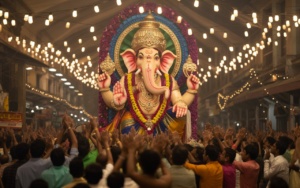
Ganesh Chaturthi is one of the biggest festivals in India, but if there is one place that captures its true grandeur, it is Mumbai. Every year, lakhs of people gather to celebrate Lord Ganesha, and the most famous idol of them all is Lalbaugcha Raja.
Known as the King of Lalbaug, this iconic idol is not just a religious figure but also a cultural and emotional landmark for millions. People from across India visit Mumbai during Ganesh Chaturthi just to take the blessings of Lalbaugcha Raja.
But behind this devotion and celebration lies a world of planning, organizing, and management. From crowd control to decoration, from security to social media coverage—event management plays a huge role in making Lalbaugcha Raja a success every year.
Let’s dive deep into the story of Lalbaugcha Raja, its history, how it became so popular, and how event management keeps this mega festival running smoothly.
The Story of Lalbaugcha Raja
The history of Lalbaugcha Raja goes back to 1934, when a simple Ganesh idol was installed in Lalbaug, a busy marketplace in Mumbai. Local fishermen and vendors prayed for a permanent place for their market, and when their wish came true, they started worshipping Lord Ganesha as their savior.
Over time, this small community celebration grew into a massive festival, with the idol being recognized as the wish-fulfilling Ganpati (Navsacha Ganpati). People believe that praying to Lalbaugcha Raja brings blessings, prosperity, and the fulfillment of desires.
Today, the idol is one of the tallest and most visited Ganesh idols in India, attracting crores of devotees during the 10-day festival.
Why is Lalbaugcha Raja So Special?
The Idol’s Grandeur – The idol is usually 15 to 20 feet tall, decorated with gold jewelry, traditional attire, and intricate designs. Each year, it is crafted with great detailing that makes it stand out.
Faith and Belief – Devotees stand in queues for over 12–14 hours just to get a glimpse. Many people believe their wishes will be granted if they bow before the King of Lalbaug.
Celebrity Attraction – From Bollywood stars to famous politicians, everyone comes to seek blessings here.
Community Bonding – The festival brings together thousands of volunteers, organizers, and devotees, creating a spirit of unity.
The Scale of the Celebration
The Lalbaugcha Raja Mandal is visited by 1.5 to 2 million people daily during Ganesh Chaturthi. That’s more than the population of some small cities!
Thousands of kilos of sweets and prasad are distributed.
Hundreds of cultural programs take place.
Security arrangements are almost like a national-level event.
Media houses cover it live on TV and social media.
This is where event management becomes the backbone of the celebration.
Event Management and Lalbaugcha Raja
Organizing such a massive festival is no easy task. It requires professional event management strategies. Let’s break down how event planning plays a role:
1. Crowd Management
With millions of visitors, proper entry and exit routes are planned.
Volunteers and police work together to guide devotees.
Barricades and signboards ensure smooth movement.
Special arrangements are made for senior citizens and differently-abled people.
2. Stage & Pandal Design
Every year, the pandal (temporary structure for the idol) has a unique theme.
Event planners design the stage with lights, flowers, and creative décor.
The theme often reflects cultural, historical, or social messages.
Technology like LED walls and projection mapping is now being used.
3. Security & Safety
CCTV cameras are installed all around the pandal.
Metal detectors and baggage scanners are used at the entrance.
Fire safety teams and ambulances are kept on standby.
Volunteers are trained to handle emergencies.
4. Media and Communication
Social media teams handle live updates on Instagram, Facebook, and YouTube.
TV channels broadcast the aarti and visarjan.
Special passes are issued for photographers and journalists.
Mobile apps now allow devotees to take virtual darshan.
5. Eco-Friendly Initiatives
The organizers promote clay idols and artificial immersion tanks.
Solar-powered lights and sound systems are used.
Awareness campaigns are run about saving the environment.
6. Volunteer & Community Management
Thousands of volunteers are assigned duties – guiding devotees, distributing prasad, managing queues.
Training sessions are conducted before the festival.
Community kitchens are organized for feeding people.
7. Visarjan (Immersion Ceremony)
The visarjan of Lalbaugcha Raja is one of the largest processions in Mumbai.
Roads are closed, traffic is managed, and lakhs of people join the journey.
Music bands, dhols, and devotional songs fill the streets.
Event managers coordinate with police, transport, and volunteers to avoid mishaps.
Lalbaugcha Raja – A Case Study for Event Managers
If you’re a student or fresher in event management, Lalbaugcha Raja is more than just a festival. It’s a real-world lesson in:
Mega crowd management
Themed stage design
Safety protocols
Media promotions
Eco-friendly innovations
Community engagement
No textbook can teach what this one festival shows about event handling at scale.
Lessons for Event Managers from Lalbaugcha Raja
Plan Early – Large events need months of preparation.
Work with Communities – Involve locals, volunteers, and authorities.
Safety First – Fire, health, and security are top priorities.
Add Creativity – Themes and décor make the event memorable.
Adapt Technology – Live streaming, apps, and digital promotions are musts.
Be Eco-Friendly – Modern event planning must care for the environment.
The Emotional Side of Lalbaugcha Raja
Beyond management and planning, Lalbaugcha Raja is about faith and emotion. Every year, devotees cry, sing, dance, and celebrate together. It is a reminder that festivals are not just about rituals but also about:
Unity – bringing strangers together.
Hope – people believe their prayers will be answered.
Culture – preserving traditions while adding new ideas.
Conclusion
Lalbaugcha Raja is not just an idol—it is an emotion, an event, and a symbol of faith. From its history in 1934 to becoming Mumbai’s biggest Ganesh celebration, the King of Lalbaug has shown how devotion can unite millions.
But behind this devotion lies event management at its finest. Without careful planning, crowd control, decoration, media coverage, and safety measures, such a massive celebration would not be possible.
For anyone in event management, Lalbaugcha Raja is the perfect example of how tradition and modern planning come together.
As we look forward to Ganesh Chaturthi 2025, Lalbaugcha Raja will once again remind us of the power of faith, the beauty of culture, and the magic of well-organized events.
Ganpati Bappa Morya! Mangal Murti Morya!
At LIFERECALL, we bring you the stories of festivals, celebrations, and event planning across India. Stay tuned for more blogs on Ganesh Chaturthi 2025, Krishna Janmashtami, Navratri, and Diwali—all with a fresh perspective for event lovers.
Subscribe to our newsletter!
More from our blog
See all posts
Recent Posts
- Makar Sankranti: A Perfect Festival for Events January 9, 2026
- Every Event Has a Silent Star October 7, 2025
- Surprise Celebrity Visits In India : How Stars Bring Joy and Excitement. September 10, 2025