
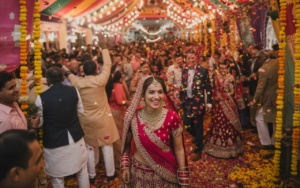
Shaadi = Event + Emotion
If there’s one thing India is most famous for, it’s shaadi (weddings). In our country, a wedding is never just about two people saying “yes” to each other—it’s about two families, hundreds of guests, many days of rituals, loads of food, dance, and emotions. From a small village to the biggest metro city, one thing is common—shaadi means full celebration.
People often say, “Indian weddings are not just weddings, they are like festivals.” And it’s 100% true. Every shaadi looks like a mini-mela with lights, music, food stalls, laughter, and sometimes a little family drama.
But behind all this fun, there’s a lot of planning and management that makes everything look smooth. And that’s where event management steps in.
Why Indian Weddings Are So Special
Indian weddings stand out because:
- They go on for many days, not just one.
- There are so many rituals, and each community has its own style.
- Every function—Mehendi, Haldi, Sangeet, Baraat, Reception—is a mini-event in itself.
- Families plan for months—shopping, food tasting, deciding décor.
- Guests are given royal treatment, because in India we say Atithi Devo Bhava (Guest is God).
That’s why the world calls it the “Big Fat Indian Wedding.”
Rituals: Small Events Inside the Big Event
Every ritual in a shaadi feels like a separate celebration. Let’s go step by step:
1. Roka / Engagement
This is where it all begins. Families exchange sweets, blessings, and gifts. Earlier it was small, but now even roka happens in hotels with décor and music.
2. Mehendi
A colorful day where the bride’s hands and feet are decorated with mehendi. Everyone sings, dances, and plays games. Event managers set up themes, DJs, décor, and food stalls.
3. Haldi
Turmeric paste is applied to the bride and groom for good luck. It’s usually filled with laughter because friends love to put haldi in a fun way. Nowadays, haldi also has full décor, photographers, and a playlist.
4. Sangeet
This is like a mini-concert. Families prepare dance performances, hire choreographers, and call DJs or live bands. It feels like a stage show.
5. Baraat
The groom’s procession is like a street party. Band, baaja, dhol, and relatives dancing non-stop. Event managers arrange horses, cars, or even special entries for the groom.
6. The Wedding Ceremony
The main moment! Depending on religion, it could be pheras, nikah, or a church ceremony. Décor, mandap setup, and timing—all managed by event planners.
7. Reception
The grand finale. Guests come in their best outfits, eat at lavish buffets, enjoy music, and bless the couple. Event managers make sure the whole vibe looks perfect.
Event Management: The Backbone of Indian Weddings
Without proper planning, Indian weddings can turn chaotic. That’s why event management is super important:
Planning & Budgeting – Families get help in setting budgets, booking venues, and hiring vendors.
Theme & Décor – Whether it’s royal, floral, or Bollywood-style, planners bring themes alive.
Food & Catering – From chaats to biryani to sweets, food is the heart of every shaadi. Event planners coordinate multiple food counters.
Logistics & Guests – Outstation guests? Event teams handle hotels, cabs, and welcome gifts.
Entertainment – DJs, singers, dholwalas, or even celebrity appearances are arranged.
Photography & Videography – From cinematic videos to drone shots, event managers connect families with the best photographers.
Crisis Management – Power cut? Traffic jam for baraat? Rain? Planners always keep backup plans ready.
Weddings Across India: Same Emotion, Different Style
Every state in India has its own wedding flavor:
- Punjabi Weddings – Loud, fun, full of bhangra and food.
- South Indian Weddings – Simple, traditional, with temple rituals.
- Rajasthani Weddings – Royal palaces, folk dances, colorful turbans.
- Bengali Weddings – Unique traditions like shubho drishti and lots of cultural songs.
- Muslim Weddings – Nikah ceremony with a grand biryani feast.
- Christian Weddings – White gowns, church bells, and elegant receptions.
Event management changes style according to these traditions but ensures smooth flow everywhere.
Why Shaadi Season Feels Like a Festival
In India, the months after Diwali till February are known as Shaadi Season.
- Streets are filled with wedding bands.
- Shops overflow with lehengas, sherwanis, and jewelry.
- Caterers and decorators are booked for months.
- Baraat traffic jams are a common sight.
It feels like the whole country is celebrating together. For event managers, this is the busiest time of the year.
The Wedding Industry: A Billion-Dollar World
- The Indian wedding industry is worth billions of dollars.
- Destination weddings in places like Goa, Jaipur, Udaipur, and Kerala are super popular.
- Families often save for years for that one dream wedding.
- Event planners, designers, caterers, and photographers—all benefit.
The Emotional Side of Weddings
Unlike concerts or office events, weddings are emotional. Parents see their dreams come alive, families come together, and couples start new journeys.
Event managers don’t just handle logistics—they help create memories that last a lifetime.
Conclusion: Shaadi = Celebration + Management
An Indian wedding is more than just a marriage. It’s:
- A festival of love and togetherness.
- A mix of tradition, food, music, and fun.
- A grand event that needs proper management.
For families, it’s about blessings and happiness.
For guests, it’s about fun and food.
For event managers, it’s about making sure everything is smooth.
That’s why we say: “Shaadi wala season is the real festival of India!”
Subscribe to our newsletter!
More from our blog
See all posts


Recent Posts
- Makar Sankranti: A Perfect Festival for Events January 9, 2026
- Every Event Has a Silent Star October 7, 2025
- Surprise Celebrity Visits In India : How Stars Bring Joy and Excitement. September 10, 2025